On this page
For many manufacturers, growth after the initial equipment sale is becoming as important as the sale itself. Spare parts, service contracts, warranty programs, maintenance visits, and remote support all depend on faster coordination across product, service, and commercial systems.
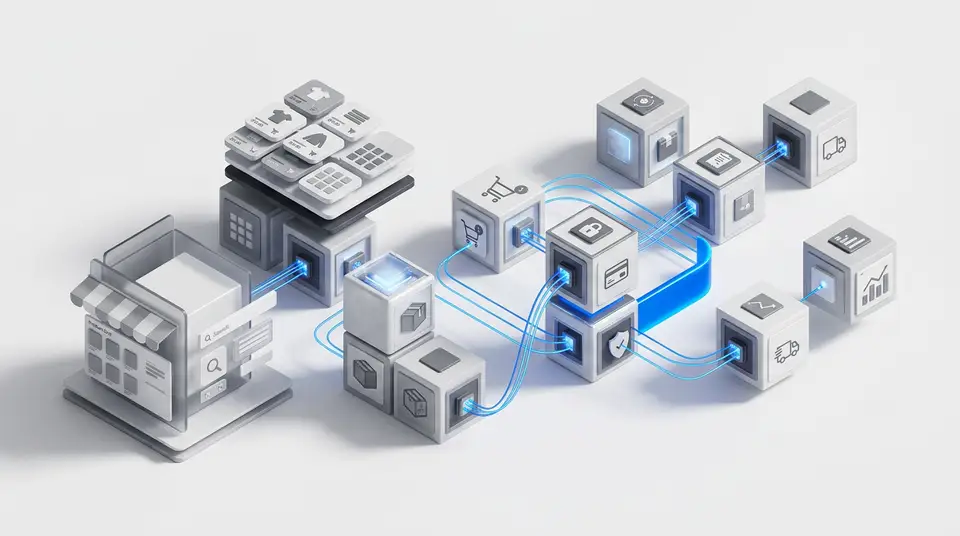
MACH, which stands for Microservices, API-first, Cloud-native, and Headless, gives manufacturers a way to modernize those workflows without forcing every aftermarket experience into one tightly coupled platform. This article explains where that architecture helps, what capabilities matter most, and how to adopt it in phases.
For many industrial companies, aftermarket services are no longer a side business. They are becoming a core revenue, margin, and customer-retention engine. That shift changes what manufacturers need from software. The stack must support spare-parts discovery, contract-aware service offers, account-specific service history, technician workflows, and digital support journeys that continue for years after a machine is installed.
This is where MACH Architecture becomes relevant. MACH helps manufacturers separate aftermarket capabilities that move at different speeds, while keeping them connected through stable interfaces and shared operational controls.
Why aftermarket matters more now
Manufacturers have strong reasons to invest in digital service models. Margins on parts and services are often healthier than margins on new equipment. Customers also expect more than break-fix support. They want faster parts lookup, clearer maintenance planning, better visibility into service history, and more proactive guidance when assets show signs of risk.
That makes the installed base strategically important. The more clearly a manufacturer can understand each asset, its configuration, service history, warranty status, and usage pattern, the easier it becomes to offer relevant parts, contracts, upgrades, and predictive maintenance services.
The business opportunity is clear, but many organizations still run aftermarket operations across disconnected portals, spreadsheets, legacy service systems, and tightly coupled commerce platforms. That slows down improvement exactly where the market is moving.
Where legacy stacks limit aftermarket growth
In many manufacturers, aftermarket workflows grew around internal system boundaries rather than customer journeys. A service team may use one application for case handling, another for field scheduling, another for warranty logic, and another for parts ordering. Dealers, distributors, and end customers then see fragmented experiences on top of that landscape.
Common failure patterns include:
- Service data is trapped in silos: Asset history, parts compatibility, warranty rules, and service entitlements are difficult to combine in one experience.
- One release path controls too much: A change to service pricing, parts availability logic, or customer messaging waits on the same deployment cycle.
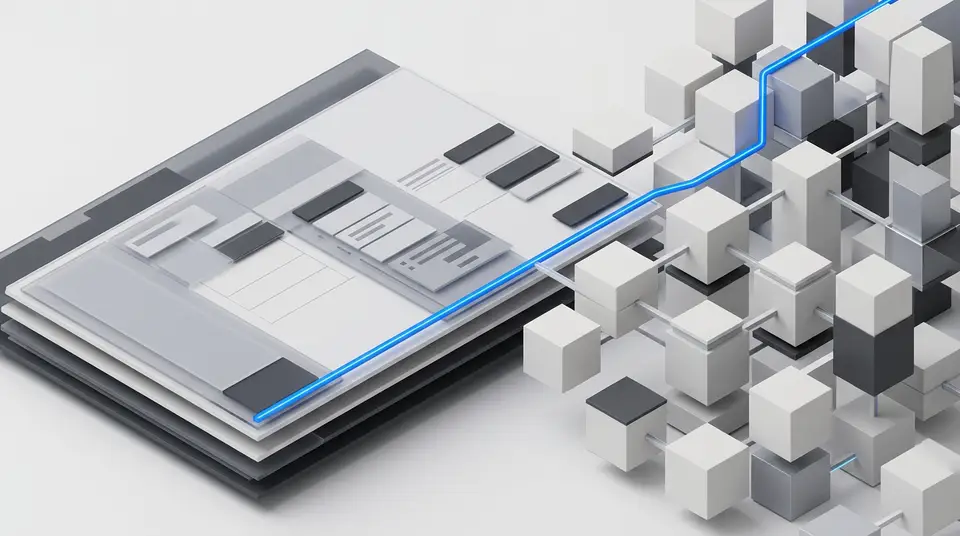
- Back-office systems leak into the experience: Portals expose internal complexity because there is no composition layer translating operational data into a customer-friendly model.
- Channel expansion is expensive: Adding dealer self-service, technician apps, or customer portals requires custom integration work each time.
- Digital services are hard to monetize: Remote diagnostics and connected support data exist, but the business cannot package them into clear offers quickly.
These conditions do not disappear by adding a new front end. They improve when teams create clearer ownership, more reliable contracts, and runtime patterns that match the service business.
Where MACH creates leverage in aftermarket services
Use the table below to connect common aftermarket priorities to the architectural capabilities that support them.
| Aftermarket priority | What the architecture needs to do |
|---|---|
| Spare-parts growth | Connect asset context, parts compatibility, pricing, and availability through stable read models so buyers can identify the right part quickly. |
| Service contract expansion | Separate contract rules, entitlements, and renewal workflows from the portal so commercial logic can evolve without rewriting the entire experience. |
| Connected service offers | Ingest condition and usage data from machines, then expose it to service applications and customer experiences through governed interfaces. |
| Dealer and customer self-service | Reuse the same domain services across portals, apps, and assisted-service channels instead of rebuilding logic channel by channel. |
| Operational resilience | Scale parts search, service scheduling, and remote diagnostics independently, with clear fallback behavior when one dependency is degraded. |
This is the practical value of MACH in manufacturing aftermarket. It is not about maximizing the number of services. It is about giving spare parts, service operations, experience teams, and platform teams clearer boundaries so the service business can evolve faster than the equipment core.
A useful target operating model
A strong aftermarket architecture usually includes a small set of clearly owned capabilities:
- Asset and installed-base service: Tracks equipment identity, configuration, location, coverage status, and service history.
- Parts and compatibility service: Exposes the parts catalog, supersession rules, and fitment logic so ordering and technician workflows use the same truth.
- Service contract and entitlement service: Determines what support level, parts coverage, response commitments, or visit allowances apply to a customer and asset.
- Service execution layer: Handles case intake, scheduling, dispatch, work orders, and completion events.
- Experience layer: Supports dealer portals, customer self-service, and assisted-service interfaces without owning every business rule directly.
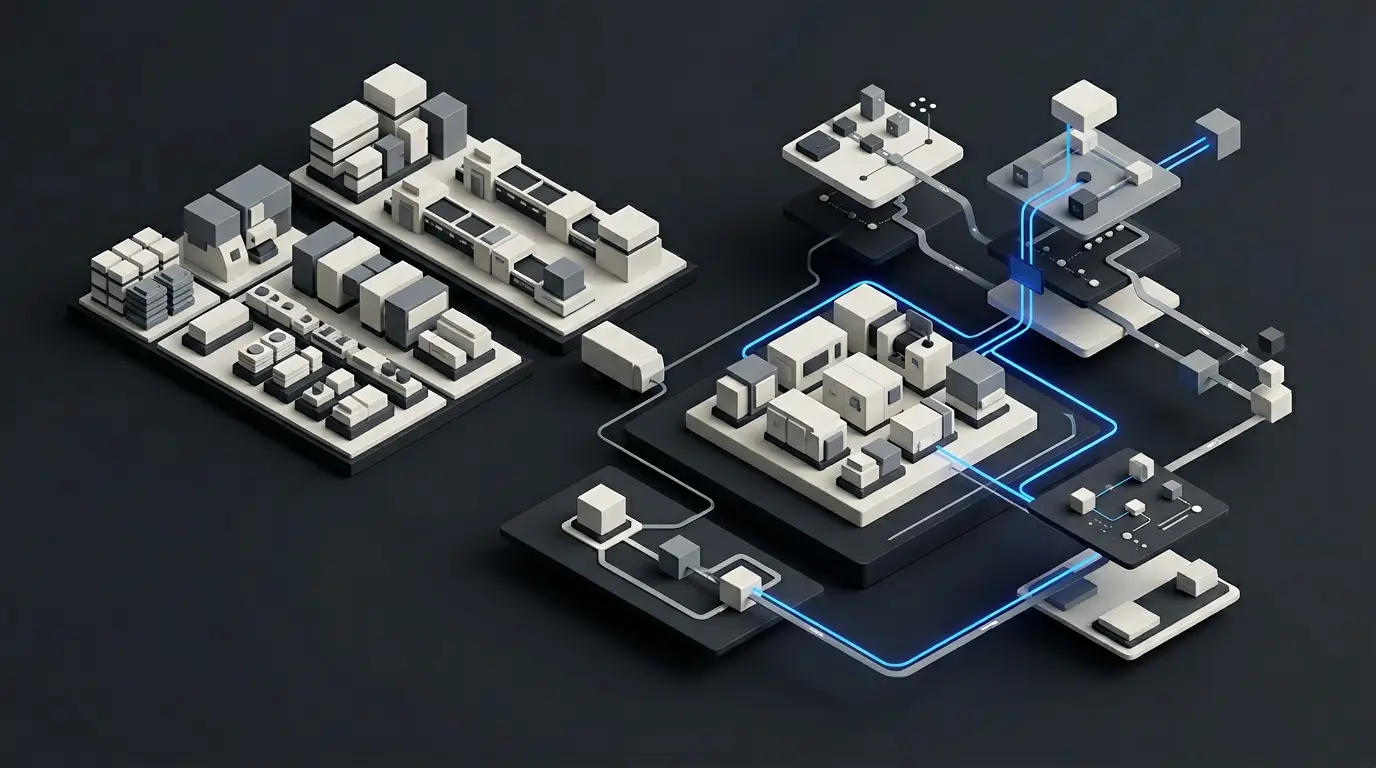
These capabilities should collaborate through explicit APIs and events. In many cases, existing systems still remain important. For example, an ERP system may stay authoritative for billing or inventory, while a service platform remains the source for dispatch workflows. The role of MACH is to make those roles legible and easier to assemble into modern experiences.
High-value journeys manufacturers can modernize first
Most teams should not try to modernize every aftermarket journey at once. A better approach is to start with a workflow where customer friction and internal complexity are both high.
Good early candidates include:
- Spare-parts lookup and reorder. Combine installed-base context, parts compatibility, pricing, and availability in one self-service flow.
- Warranty and coverage checks. Surface entitlement status before a customer opens a claim or schedules a visit.
- Preventive maintenance planning. Use service intervals, asset usage, and work history to recommend upcoming actions.
- Remote diagnostics and escalation. Turn connected-machine signals into cases, recommendations, or technician preparation steps.
- Service agreement renewal. Give account teams and customers clearer visibility into contract status, renewal timing, and upgrade options.
These journeys work well as initial slices because they touch real value levers. They can improve parts revenue, reduce service friction, and create better conditions for recurring digital services.
API-first design matters more than channel design alone
In aftermarket programs, the user interface often gets attention first because service journeys are visible to customers and dealers. The deeper constraint is usually interface quality between systems.
Important contract decisions include:
- Asset identity rules: How every system refers to the same machine, configuration, and customer relationship.
- Compatibility semantics: How the platform determines which part fits which asset revision and under what conditions.
- Entitlement logic: How service level, warranty status, and contract coverage are evaluated at runtime.
- Event vocabulary: How systems describe service creation, technician completion, part shipment, and maintenance recommendations consistently.
- Fallback behavior: What the experience should show when a dependency is delayed, unavailable, or still reconciling data.
If those rules stay implicit, even a modern stack can become a distributed monolith. Teams deploy separate components, but they still depend on fragile assumptions and synchronized changes.
Cloud-native operations are part of the service promise
Aftermarket journeys often run across long time horizons. A machine may stay in service for years. A maintenance recommendation may turn into a technician visit days later. A part may be ordered through one channel and installed through another. Reliability depends on operational discipline as much as architecture diagrams.
Operational priorities usually include:
- Traceability by asset and case: Teams need to follow a service event from machine signal or customer request through parts, scheduling, and completion.
- Idempotent processing: Retries should not duplicate claims, dispatches, or order submissions.
- Queue and retry hygiene: Service events must be observable before backlog turns into customer delay.
- Scalable read paths: Parts search, asset lookup, and portal traffic should scale without forcing the whole stack to scale as one unit.
- Clear degradation paths: If a dependency fails, the user should still get a useful answer rather than an opaque outage screen.
This is where the cloud-native part of MACH matters. Elastic runtime is useful, but predictable operations, observability, and controlled failure handling matter more.
A phased path toward the future state
Manufacturers usually get better results when they modernize aftermarket services in stages:
- Clarify systems of record. Decide where asset truth, parts truth, entitlement logic, and service execution truth belong.
- Publish stable interfaces around those domains. Create reusable contracts before replacing every legacy screen.
- Launch one vertical slice. Start with a bounded journey such as spare-parts self-service for one customer segment or installed-base visibility for one product family.
- Add connected-service inputs carefully. Bring machine telemetry and condition data into the platform only when ownership and service workflows are already clear.
- Expand across channels. Reuse the same services for dealers, customers, contact-center teams, and field technicians.
- Retire duplicate logic. Remove old integrations and copied business rules so temporary coexistence does not become permanent complexity.
That sequence keeps architecture tied to measurable business outcomes. It also reduces the risk of a large transformation that delivers a new portal without truly improving the service operating model.
Metrics that show real progress
Track a small set of indicators that connect architecture work to service outcomes:
| Metric | Why it matters |
|---|---|
| Parts order conversion | Shows whether customers and dealers can successfully identify and purchase the right part. |
| Service-contract attach or renewal rate | Indicates whether digital experiences support recurring service revenue. |
| Time to schedule or resolve a case | Reveals whether system orchestration is reducing operational friction. |
| Installed-base coverage quality | Measures whether the business has usable data to support service offers and asset-specific experiences. |
| Digital service adoption | Shows whether customers are using portals, remote support, or connected-service features instead of offline workarounds. |
Summary
The future of manufacturing aftermarket services is more digital, more connected, and more dependent on software that can adapt by capability instead of by one large release train. MACH helps because it gives manufacturers a way to combine installed-base intelligence, spare-parts commerce, service execution, and customer experience without forcing them into one tightly coupled system.
The goal is not architecture purity. The goal is a service business that can grow revenue, improve retention, and launch new offers around the installed base with less friction and less operational risk.