On this page
Retail organizations are under pressure to launch faster across storefronts, marketplaces, apps, and in-store touchpoints without increasing operational fragility. Many teams now evaluate MACH as a way to change how delivery works, not only what technology they buy.
MACH stands for Microservices, API-first, Cloud-native, and Headless. In retail, the practical shift is from one release train and one ownership center to capability teams with clear contracts, shared reliability standards, and measurable business outcomes.
The shift is about operating model, not only stack selection
In many retail programs, architecture discussions start with vendors and end with integration concerns. The more useful starting point is operating model design. Who owns pricing behavior, checkout flow, promotions, and content. How fast each area can release. How reliability is measured across channel teams.
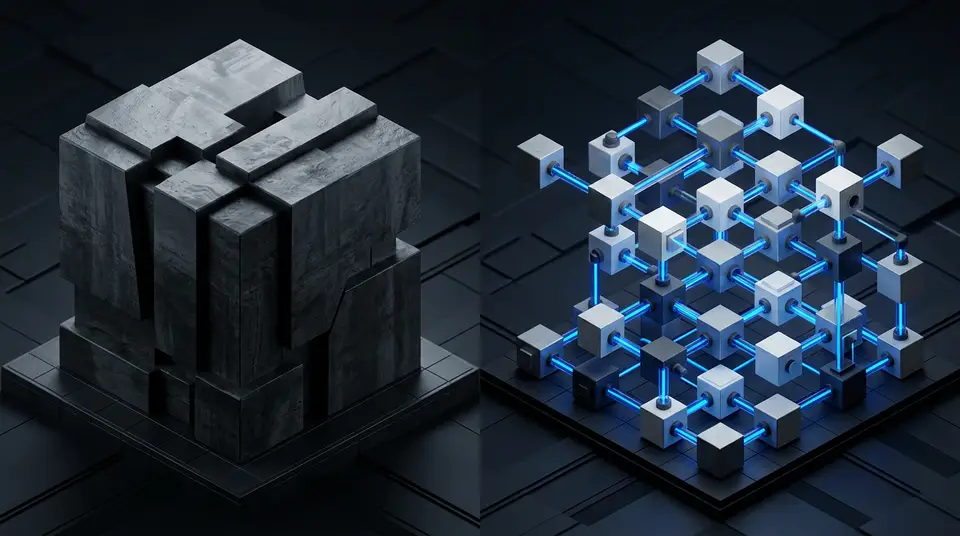
MACH is becoming an operating model because it forces these questions into explicit decisions. Instead of one central platform team carrying most changes in sequence, retail organizations define capability ownership, publish stable API contracts, and govern cross-cutting quality in a repeatable way.
Why retail pressure makes this transition more common
Retail tends to expose coordination problems earlier than many sectors. Seasonal peaks, campaign-led traffic spikes, and channel expansion increase the cost of tightly coupled releases. A platform can be functionally rich and still too slow to change safely.
Use the table below to scan why operating-model pressure in retail maps naturally to a composable approach.
| Retail pressure | What breaks in tightly coupled models | What MACH operating practices improve |
|---|---|---|
| Frequent merchandising and promotion changes | Release windows become crowded, and pricing, content, and checkout updates wait on the same pipeline. | Capability teams can ship independently behind versioned APIs with shared guardrails. |
| Multi-channel growth (web, app, marketplaces, stores) | One presentation model cannot satisfy all channels at the same pace. | Headless content and commerce services support channel-specific frontends without duplicating core logic. |
| Vendor diversification for search, payments, and personalization | Switching providers is expensive when integrations are implicit and embedded deep in one codebase. | Explicit contracts reduce vendor lock-in and improve negotiation leverage. |
| Peak events with uneven load distribution | Teams scale entire platforms when only a few domains are hot. | Domain-level scaling and resilience policies improve cost-to-performance ratio. |
What “new operating model” means in day-to-day retail execution
For retail leaders, the practical pattern is consistent across successful programs.
- Capability ownership: Each domain, such as catalog, cart, checkout, promotions, and fulfillment, has clear product and engineering ownership with runtime accountability.
- Contract-first integration: Teams treat interfaces as products, with compatibility rules, deprecation windows, and consumer-aware changes.
- Reliability governance: Shared standards for tracing, alerting, and SLOs prevent local optimization from degrading end-to-end journeys.
- Incremental rollout: Organizations deploy production vertical slices instead of full-platform replacements.
These are operating decisions first and architecture choices second. This is why MACH Architecture appears in strategic planning discussions, not only in engineering roadmaps.
Common mistakes when teams adopt the label but not the model
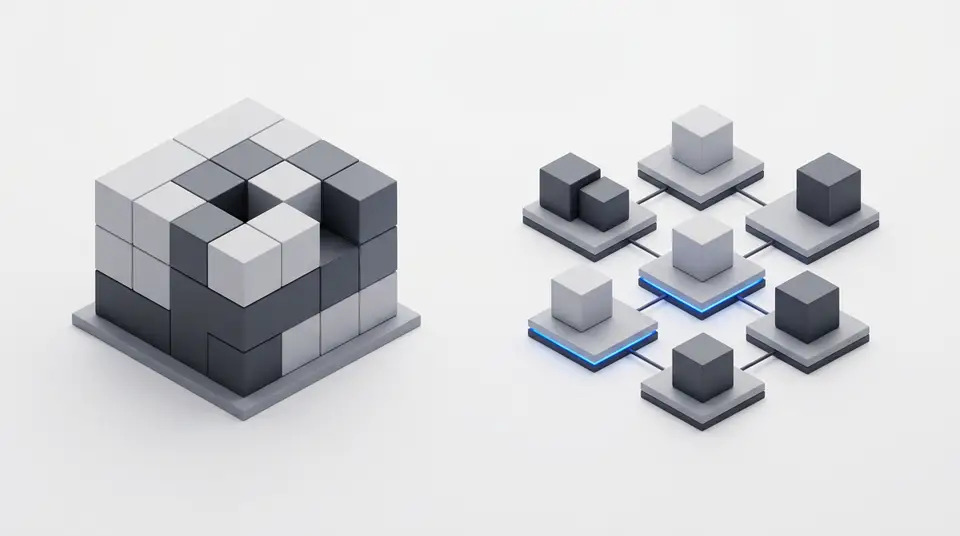
Some programs announce MACH and still operate as a centralized release system with distributed code. That pattern often leads to a distributed monolith.
Warning signs to watch:
- No cross-domain standards: Teams ship quickly in isolation, but production troubleshooting slows because telemetry and error contracts vary by service.
- Procurement and security lag: Architecture expands faster than vendor review, risk assessment, and data governance processes.
- Ownership mismatch: Services are split technically while incentives and team boundaries remain function-based instead of journey-based.
- Migration as one program wave: Large synchronized rewrites increase risk and delay evidence of value.
The correction is usually operational. Re-scope to fewer domains, tighten contract governance, and prove outcomes with one or two customer-facing journeys.
What retailers gain when the operating model matures
When capability ownership and contract governance become routine, retailers typically report gains in three areas.
- Faster controlled change. Teams launch experiments and channel improvements without waiting for full-platform release cycles.
- Better resilience during peaks. Critical journeys fail in narrower scopes, with clearer ownership and quicker recovery paths.
- Stronger strategic flexibility. Teams can evolve vendor mix and channel strategy with less structural rework.
These gains are not automatic. They depend on investing in platform foundations, including identity, observability, and reliable deployment practices.
How to evaluate readiness before broad rollout
Before scaling across the retail estate, assess readiness with concrete questions:
| Readiness dimension | Good signal | Risk signal |
|---|---|---|
| Ownership model | Domain teams can name accountable leaders and on-call paths for customer journeys. | Ownership is shared informally and incident response depends on escalation chains. |
| Integration discipline | API standards, versioning policy, and compatibility checks are enforced. | Integrations depend on undocumented assumptions or direct data coupling. |
| Operating baseline | Automation, release safety, and telemetry are consistent across domains. | Delivery quality varies by team and production diagnostics are fragmented. |
| Executive alignment | Product, engineering, finance, and risk teams agree on phased outcomes and funding. | The initiative is framed as a technology replacement without operating commitments. |
A strong readiness profile does not require perfect maturity. It requires enough organizational alignment to support phased change without stalling in integration debt.
Closing perspective
Retail is treating MACH as a new operating model because growth now depends on independent change, resilient journeys, and flexible partnerships across channels. The architecture matters, but the durable advantage comes from how teams govern ownership, contracts, and runtime quality over time.