On this page
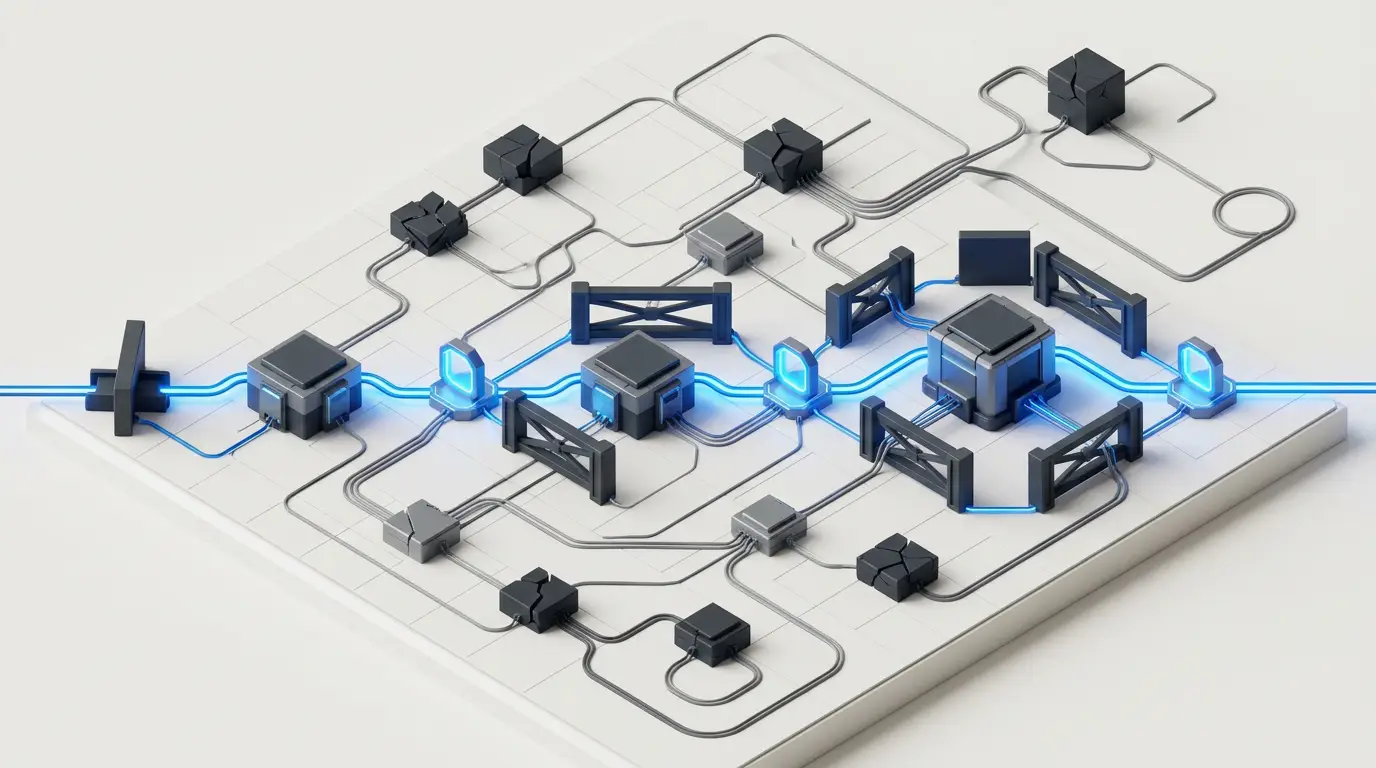
Production is where a MACH stack stops looking like a diagram and starts behaving like a dependency graph. Revenue flows depend on vendor behavior, service boundaries, timeout choices, and whether teams can explain a degraded journey quickly enough to respond with confidence.
This article focuses on three areas that matter after go-live: contract testing, service level design, and failure playbooks for the paths that carry money, inventory, and customer trust.
Why production changes the MACH conversation
Before launch, teams often discuss MACH Architecture in terms of flexibility and independent delivery. In production, the harder questions appear. Which dependencies are allowed on the checkout path? Which calls can fail softly? How will teams know whether a retry is safe when an upstream returns an error after partially completing work?
That is why a production-ready MACH model needs more than service separation. It needs explicit contracts, realistic service expectations, and operating responses that match revenue-critical behavior.
Contract testing matters because schemas are not enough
A schema can show the shape of a request or response. It does not fully express the behavior another team or vendor depends on. Production failures often come from the gap between shape and meaning.
Use the table below to understand what a stronger contract should cover.
| Contract element | Why it matters in production |
|---|---|
| Payload shape | Protects basic compatibility between producers and consumers |
| Error semantics | Clarifies what is retryable, terminal, or requires operator action |
| Performance expectations | Helps teams reason about timeout budgets and critical-path risk |
| Versioning and deprecation | Reduces surprise when an interface evolves over time |
| Auth and policy behavior | Prevents production drift in scopes, token handling, and access control |
Contract testing becomes valuable when it verifies that those expectations still hold as each side changes. Without it, teams discover breakage only after the path is under real traffic.
Where contract testing should be applied first
Not every integration needs the same depth on day one. Teams usually get the best return by applying contract discipline to the flows that carry money, availability truth, or customer-facing commitments.
Start with these paths first:
- Checkout and payment-adjacent calls, where duplicated or ambiguous behavior can create financial risk.
- Inventory and availability reads, where stale or misinterpreted responses change customer promises.
- Pricing and promotion decisions, where inconsistent logic can trigger commercial or trust issues.
- Order submission and status transitions, where downstream systems may accept work even when the upstream path looks uncertain.
This is especially important in a SaaS-heavy estate because each external dependency evolves on its own calendar.
How to design practical SLA and SLO expectations
Production teams often use the words SLA and SLO loosely, but the distinction matters. An SLA is usually a commitment with consequences. An SLO is the internal target used to keep the system healthy before that commitment is missed.
Use the table below as a simple pattern.
| Layer | What to define | Why it helps |
|---|---|---|
| Customer-facing promise | What the business is actually willing to commit for a journey or capability | Keeps promises realistic and tied to business trust |
| Internal SLO | Reliability and latency targets that give operators warning room | Prevents the team from running too close to the edge |
| Dependency budget | How much latency or failure each downstream is allowed to contribute | Makes critical-path design more disciplined |
| Degradation policy | What the journey should do when a dependency is slow or unavailable | Protects customer outcomes instead of improvising during incidents |
This model helps teams avoid a common mistake: giving every service the same target even when the commercial importance of each path is different.
Failure playbooks should be written by journey, not only by service
An incident does not feel like a service graph to the customer. It feels like a broken order, a failed payment, a missing promotion, or an unavailable delivery slot. That is why production playbooks should be organized around journeys as well as technical ownership.
Use the table below to shape those playbooks.
| Journey risk | What the playbook should answer |
|---|---|
| Payment uncertainty | Was money captured, authorized, or left in an unknown state? What is the safe retry path? |
| Inventory drift | Which availability promises may now be incorrect, and how should channels degrade? |
| Promotion inconsistency | Which customers may be seeing different commercial outcomes, and how should the issue be contained? |
| Order-state mismatch | Which orders may have been accepted downstream without a clean upstream acknowledgement? |
Good playbooks usually name the idempotent retry path, the customer-safe fallback, the operator escalation route, and the data that must be checked before recovery actions begin.
What teams often discover too late
Many production problems are predictable, but only if the team asks the right questions before go-live.
- Critical-path chains are too deep: Too many synchronous calls push latency and failure risk into the customer journey.
- Retries are unsafe: Teams assume a failed response means no side effect occurred, which is often false.
- Observability follows services but not journeys: Engineers can see logs and traces, but business teams still cannot answer what happened to a customer order.
- Degradation rules are undocumented: Everyone assumes the experience will “fail gracefully,” but nobody defined what that means.
- Version drift accumulates quietly: One old consumer or integration path delays cleanup and raises future change risk.
These issues are not reasons to avoid MACH. They are reasons to treat production readiness as part of the architecture itself.
A production-readiness checklist for revenue paths
Before scaling a composable flow, use this checklist:
- Count critical-path dependencies. If too many systems must answer before the customer gets a truthful result, simplify the path.
- Verify behavioral contracts. Do not stop at schema validation for revenue-sensitive flows.
- Set internal objectives and budgets. Make latency and reliability expectations explicit across the path.
- Write journey playbooks. Document retries, fallbacks, escalation, and reconciliation steps.
- Rehearse degraded states. Test what happens when one dependency slows, fails, or returns partial truth.
This sequence makes operations decision-ready before scale exposes hidden assumptions.
Summary
Running MACH Architecture in production requires more than composable components. It requires contract testing that checks behavior, service targets that reflect journey importance, and failure playbooks that protect customer outcomes when dependencies misbehave. That is how teams turn architectural flexibility into operational credibility.