On this page
MACH stands for Microservices, API-first, Cloud-native, and Headless. Headless content management often appears in the same conversations because both approaches separate what you store and govern from how each channel renders it.
A headless <abbr data-definition="Content management system. Software for authoring, storing, and publishing structured content often separate from front-end rendering.">CMS</abbr> keeps editorial authority in a managed content model. Storefronts, apps, and partner surfaces request that content through published interfaces. That pairing can speed channel work when governance, caching, and preview are staffed like production concerns.
This article explains what headless content provides in a MACH program, what moves onto your integration plan, and where teams often underestimate preview and cache behavior. For the full stack story, see MACH Architecture.
What “headless CMS” means
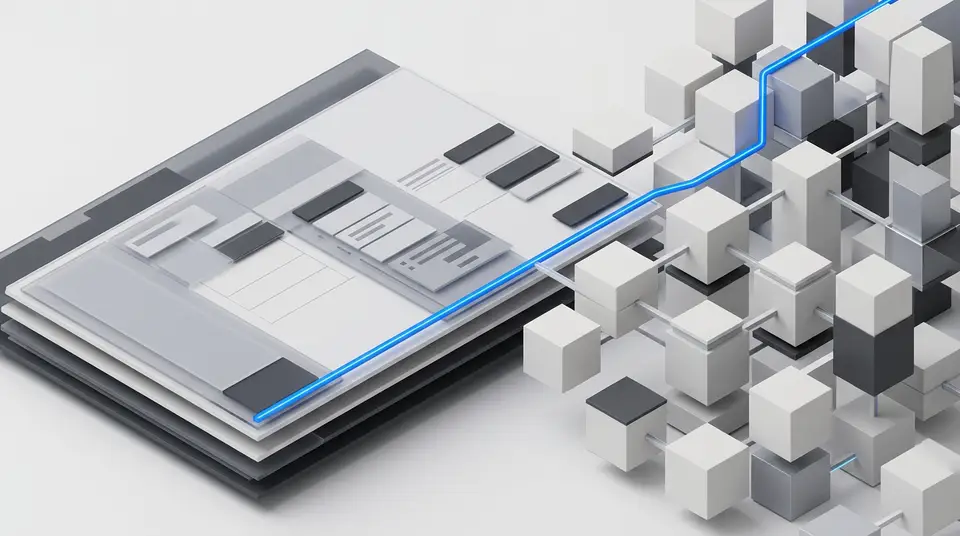
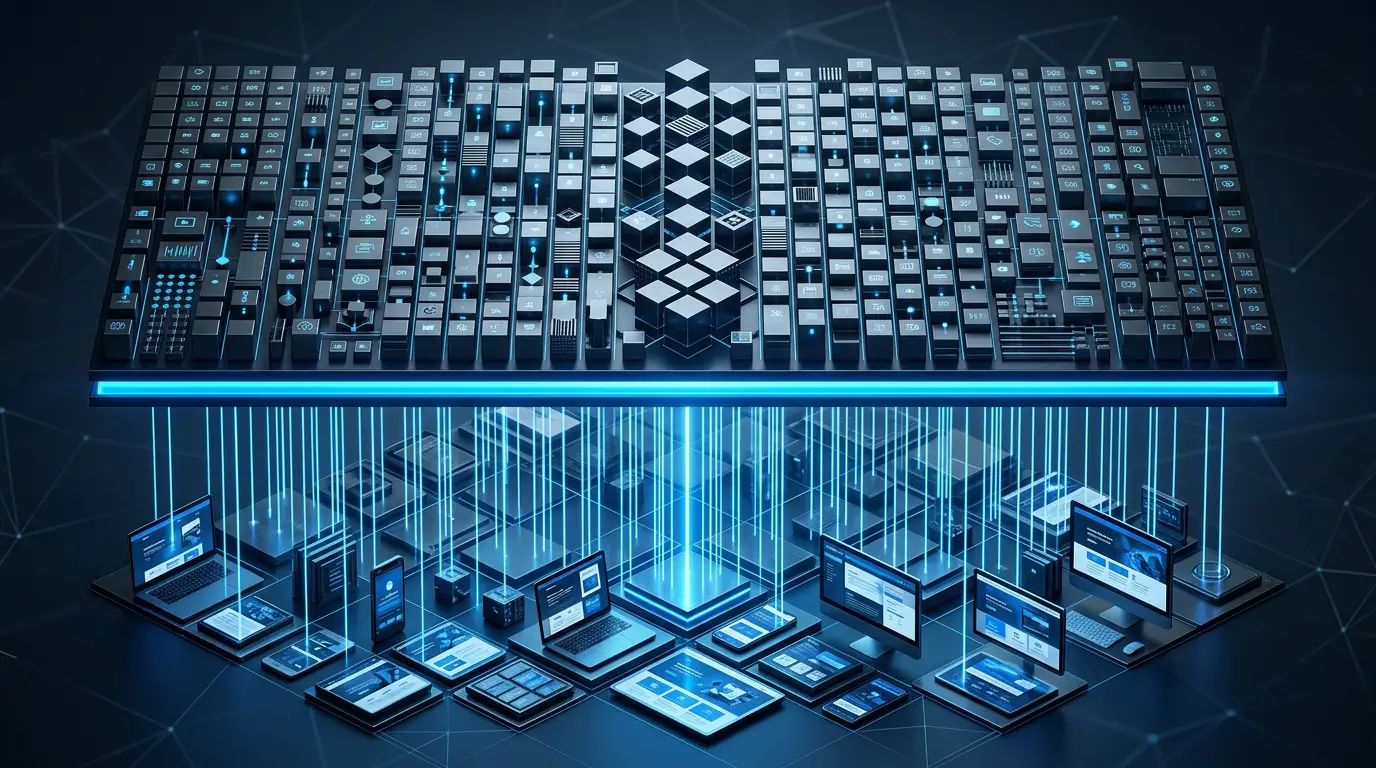
A headless CMS stores and governs structured entries in a backend system and delivers them through APIs. It does not own the customer-facing front end: templates, routing, and design system live in your channel applications. Your channels pull content, merge it with commerce and identity data, and render with frameworks and performance budgets you control.
That separation is the Headless letter in MACH. It is also where a large share of integration work appears once traffic is real.
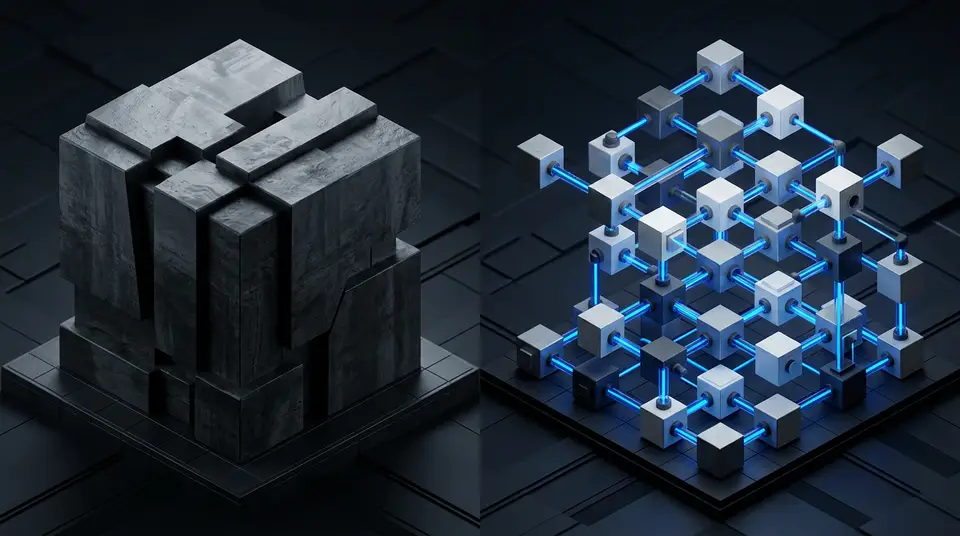
Headless versus coupled publishing
Use the table below to anchor vocabulary before going deeper. Coupled here means a classic stack where the CMS ships pages or themes tightly bound to its own runtime.
| Dimension | Coupled (traditional) | Headless |
|---|---|---|
| Who owns rendering | Often the CMS or its theme layer | Your web app, native clients, and edge tier |
| Primary contract | Shared database or internal runtime expectations | Published API schemas, webhooks, delivery CDN rules |
| Channel expansion | Frequently another theme, plugin, or migration | Reuse the same entries when the content model was designed for reuse |
Headless is not automatically simpler. It relocates complexity into model design, caching, preview, personalization, and cross-team ownership of schemas.
How headless maps to MACH
- Microservices. Content can be a bounded capability with its own lifecycle. Experience teams ship HTML and client bundles without redeploying the CMS, and editorial changes do not require retesting an entire monolith when API contracts hold.
- API-first. Editors work against a structured model; developers integrate through REST, GraphQL, or vendor-specific delivery APIs. The handshake is explicit, which suits composable estates if you version, deprecate, and test like any other revenue-facing surface.
- Cloud-native. Delivery leans on autoscaled API tiers, identity for preview, CDN behavior, and observability across edges. You replace “one carefully tuned CMS server” with a graph of services that must stay coherent.
- Headless. Experience code lives outside the CMS. That is the architectural commitment in concrete form.
What you gain when the model is honest
These outcomes show up in programs that fund taxonomy work and API discipline, not only a vendor swap.
| Outcome | What it depends on |
|---|---|
| Channel coverage | Reusable fields, consistent taxonomy, naming that matches how merchandising and campaigns think |
| Parallel roadmaps | Stable read contracts, clear preview semantics, and agreed error handling when an entry is not cacheable yet |
| Performance | Rendering and caching move to tiers you control; the CMS is not on every HTML byte path if you design for CDN and invalidation |
| Security posture | Scoped credentials for delivery versus admin, locked-down preview URLs, webhooks verified with signatures, separate blast radii between editorial tools and storefront |
Integration surfaces teams must specify
APIs are the obvious seam. The less obvious seams decide whether launches feel stable or fragile.
- Preview and staging. Editors need to see unpublished work in context: real components, real personalization rules. That usually means authenticated preview endpoints or broker services, not only a call to the public API.
- Cache keys and cache invalidation. A change can be “live” in the CMS while edges still serve an older response. Purge contracts and TTL strategy belong in the same document as commerce API SLOs.
- Personalization and bounded context. When segments or recommendations alter what a user should see, your content graph meets commerce or decisioning services. Clarify who owns conflicts (for example hero placements versus algorithmic rails).
- Webhooks and asynchronous rebuilds. Search indexes, static site builders, and notification workers often react to publish events. Treat retries, duplicates, and idempotency the same way you would for payment-adjacent workflows.
The production-focused article in related reading describes how these seams behave under load.
When headless is a strong fit (and when it is not)
| Situation | Headless tends to fit | Headless tends to struggle |
|---|---|---|
| Channel count | Web plus app, kiosks, partners, or markets that cannot share one template | A single marketing site with rare changes and no appetite for front-end engineering |
| Editorial velocity | Frequent campaigns, reusable modules, systematic localization | One-off brochure pages where a page builder would finish the job faster |
| Engineering capacity | Teams that can own rendering, caching, and design systems | Organizations expecting the CMS vendor to own end-to-end performance without partner engineering |
Coupled tooling can be the right choice when constraints are narrow. MACH is a bet on autonomy and explicit contracts; headless is how many teams express the Headless pillar without treating editorial and experience lifecycles as the same deployable unit.
Governance habits that prevent drift
- One owning team for the content model with a named product partner; avoid “every squad adds fields.”
- Schema change policy aligned to API versioning: additive by default, breaking changes on a published clock.
- Documentation in business language, not only developer consoles, so merchandising and legal share the same names for statuses and disclaimers.
- CI/CD checks for consumer fixtures where a breaking field rename would break a storefront.
Summary
Headless CMS is a practical path toward MACH Architecture because it forces clear boundaries between content authority and experience delivery. The benefit is real when contracts, caching, and preview receive the same seriousness as checkout. Without that, bottlenecks move from templates into unclear integration behavior.
Use related reading to connect this topic to pillar definitions, monolith comparison, adoption sequencing, and runtime discipline as traffic grows.