On this page
MACH Architecture is often framed as either the future of digital commerce or a temporary wave of vendor hype. Both views miss important context.
For most teams, MACH is best understood as a durable operating model that can deliver major business value when product complexity, team structure, and speed requirements justify its costs.
The short answer is this: MACH is neither a passing fad nor a guaranteed revolution for every company. It is a meaningful shift in how digital products are built and operated, but its value depends on context.
The longer answer matters more for real decisions. If your team is choosing between modernizing a monolith and moving toward composable systems, the right question is not whether MACH is fashionable. The right question is whether MACH solves the constraints that currently block your roadmap, your delivery speed, and your ability to change safely.
You can also review foundational context in MACH Architecture.
Why MACH feels like a revolution
For many organizations, MACH produces outcomes that feel transformative because the bottlenecks are real and expensive.
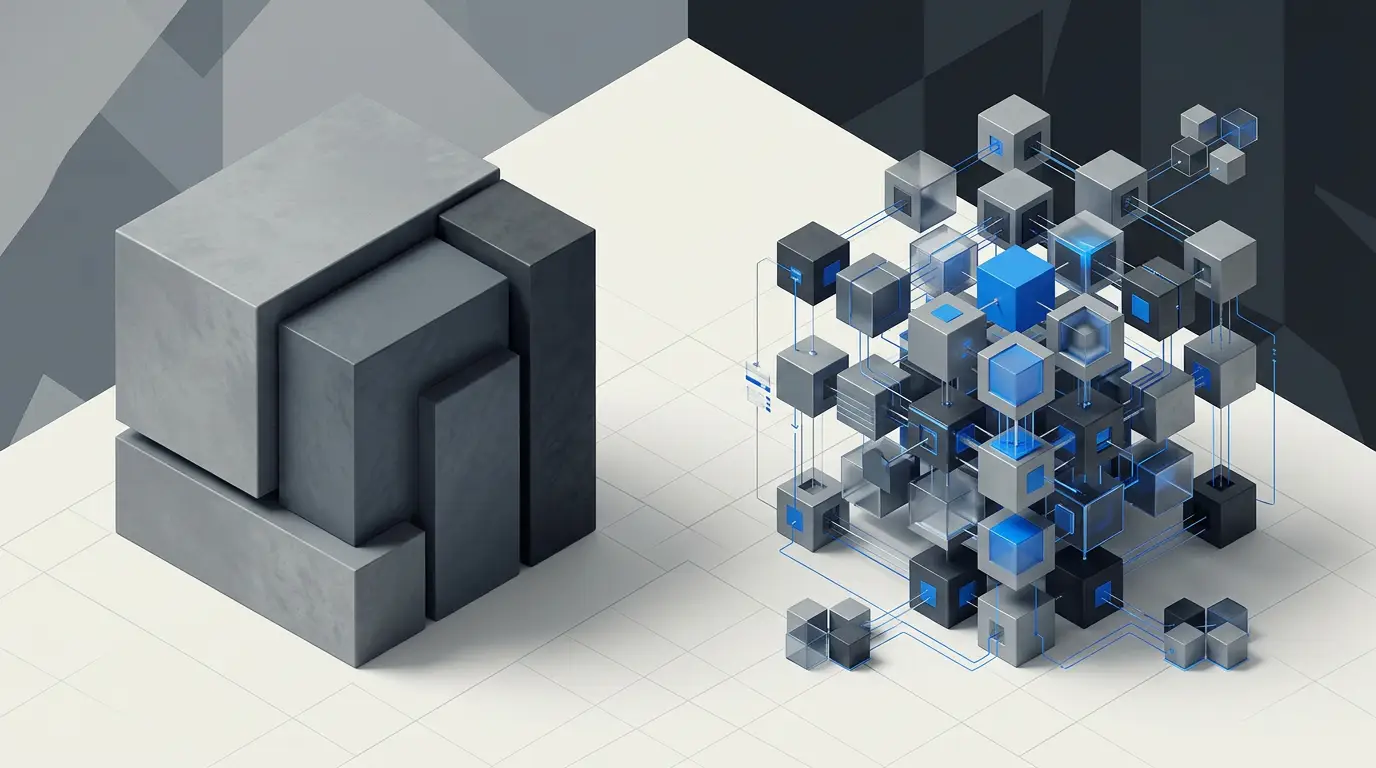
Use the table below to scan where the sense of “revolution” usually comes from.
| Dimension | Traditional tightly coupled stack | MACH-style stack |
|---|---|---|
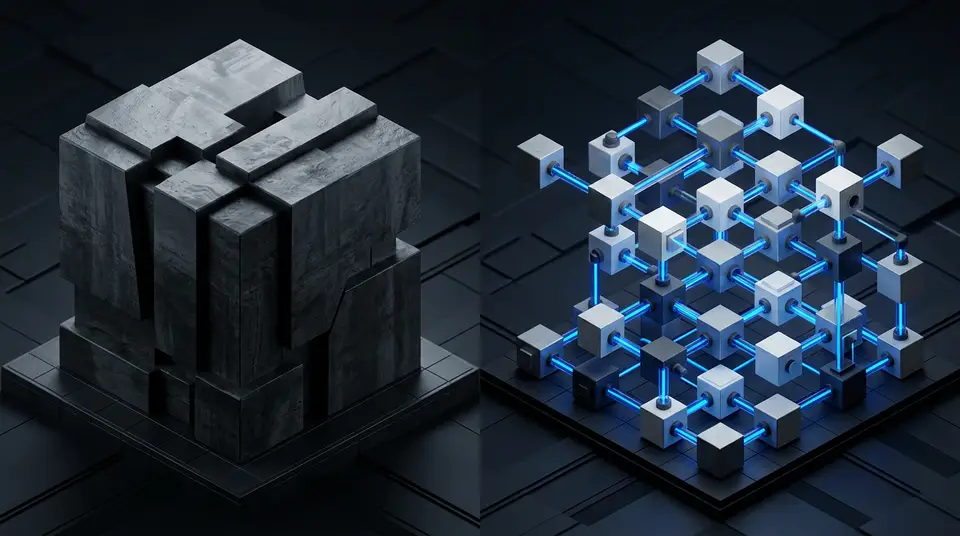
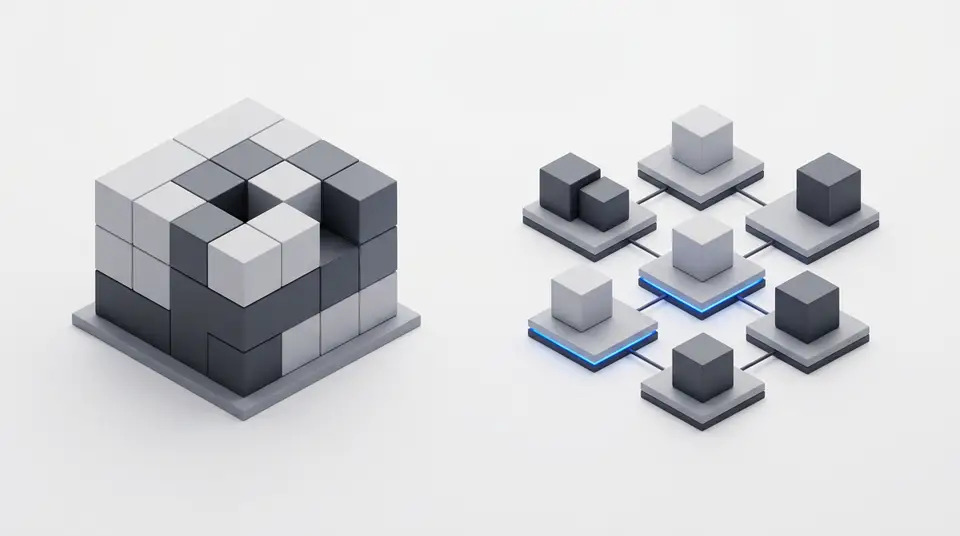
| Release independence | One shared release train means teams often wait for each other. | Service-level deployment allows teams to ship changes on their own timeline. |
| Change surface area | Small updates can require broad regression testing across the full platform. | Isolated capabilities reduce blast radius when ownership and contracts are clear. |
| Channel experimentation | New channels often require deep changes in coupled presentation and backend layers. | API-first contracts make reuse across web, app, kiosk, and partner channels easier. |
| Scaling model | Capacity planning is often platform-wide, even when one domain is hot. | Domain services can scale independently based on actual traffic patterns. |
| Vendor agility | Replacing one capability may require replacing many connected pieces. | Loose coupling makes selective replacement more practical over time. |
For teams living with slow release cycles, this can feel like a structural break from the past. In that sense, calling MACH a revolution is understandable.
Why MACH can look like a trend
MACH can also disappoint when it is adopted as branding instead of as an operating model.
Common failure patterns include:
- Architecture before problem: Teams split systems into microservices without a validated business need for independent scaling, independent release cadence, or multi-channel flexibility.
- Tooling without ownership: Organizations buy composable products, but keep centralized decision bottlenecks and unclear service boundaries.
- Contract neglect: SLA targets are defined, but interface contracts, versioning policy, and backward compatibility discipline are weak.
- Integration underestimation: Distributed systems introduce new complexity such as retries, network failures, and idempotency requirements.
- Platform gap: Teams do not invest in platform foundations like observability, deployment standards, and developer experience, so productivity gains never materialize.
When these gaps are present, MACH can look like a cycle of market enthusiasm followed by delivery friction. That is usually not a failure of principles. It is a mismatch between the architecture and the organization’s execution readiness.
What is actually changing under the surface
The durable part of MACH is not a specific vendor landscape. It is the shift toward explicit boundaries, contract-driven collaboration, and domain ownership.
Three changes tend to persist even as tools evolve:
- Boundaries as product assets. Teams treat service contracts as long-lived interfaces, not temporary implementation details.
- Independent evolution paths. Business domains can change at different speeds without forcing full-platform synchronization.
- Operational accountability. Delivery teams own runtime outcomes, not only feature output.
This is why MACH has lasted beyond a short hype window. It aligns with how modern product organizations need to operate when channels, integrations, and customer expectations change continuously.
Where MACH is usually a good fit
MACH is often a strong choice when these conditions are true:
- Multi-brand or multi-market complexity: Different regions, catalogs, or customer journeys need localized evolution.
- High change frequency: Product teams run frequent experiments and need short, safe release cycles.
- Domain specialization: Distinct teams can own pricing, search, checkout, content, and personalization with clear boundaries.
- Integration-heavy ecosystems: External partner systems and internal services need stable, reusable interfaces.
It is usually a weaker fit when product scope is narrow, change frequency is low, and one small team can move quickly inside a well-structured monolith.
So, revolution or trend?
MACH is best described as a strategic architectural transition rather than a temporary trend or a universal revolution.
- It is not a trend in the sense of a short-lived style with no lasting technical foundation.
- It can be revolutionary for organizations constrained by tightly coupled systems and slow decision-to-production cycles.
- It is not automatically superior for every company at every stage.
A practical framing is simple. Treat MACH as a capability investment with clear triggers, explicit costs, and measurable outcomes. If those triggers are present, MACH is a durable lever for speed and adaptability. If they are not, disciplined evolution of your current architecture may be the better decision today.